
Juvenile Spinner Dolphin off the Curacao coast at Watamula. I was photographing small stuff – plants and the “breathing” bubbles – when a Dutch couple yelled, “Dolphins, look!” I stood, raised my lens, and took a quick series of photos as the pod passed by our position on the ironshore, but didn’t see the young dolphin until evening when I was processing images. A clear example of fortune favoring those who are there and there prepared, out on a far strand, camera in hand. Our Uniek Curacao leader had seen dolphins once previously at Watamula, after eight years of clearing brush and picking up garbage. It was our first visit. This island is filled with treasures, less hidden than they are biding time. Waiting.
Curacao Exposed
The Good, The Bad, The Beautiful, & The Sublime
Beware: You’ve stumbled upon a nascent work in progress; explore at your own risk.


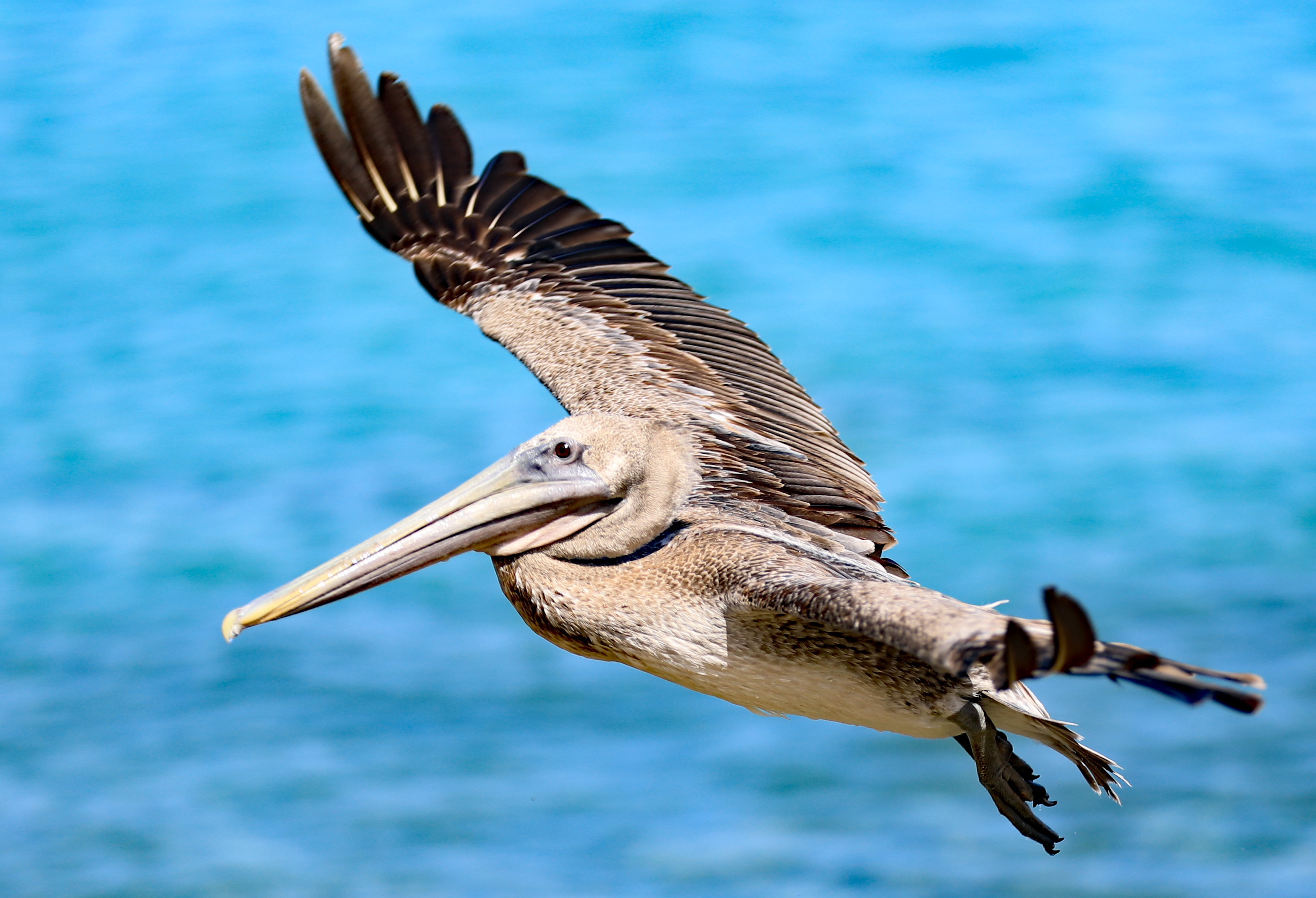
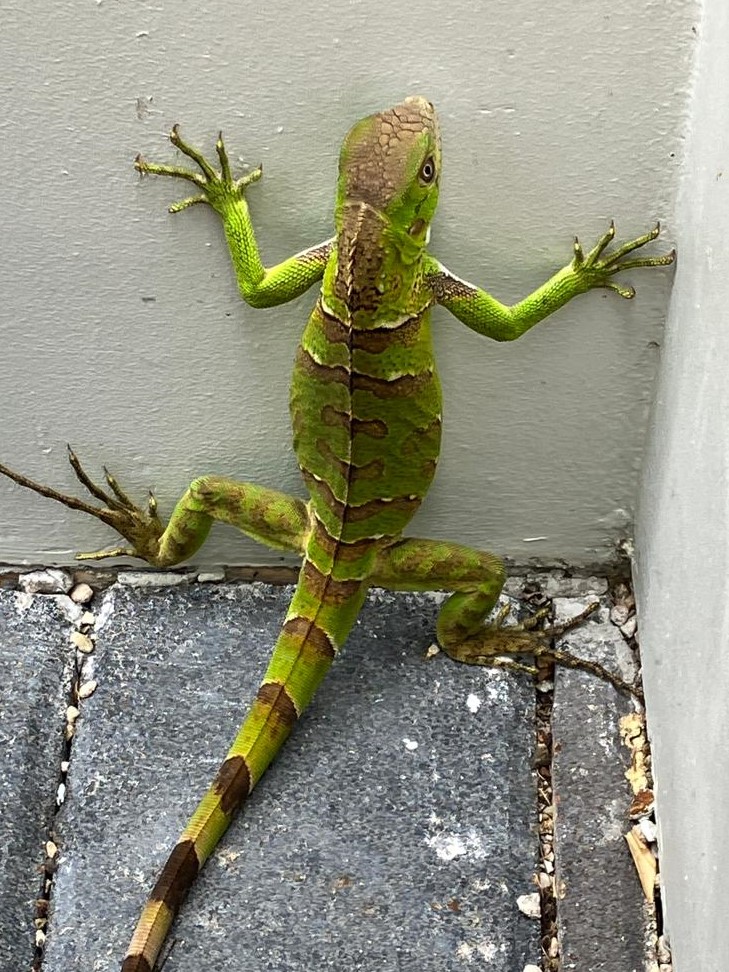
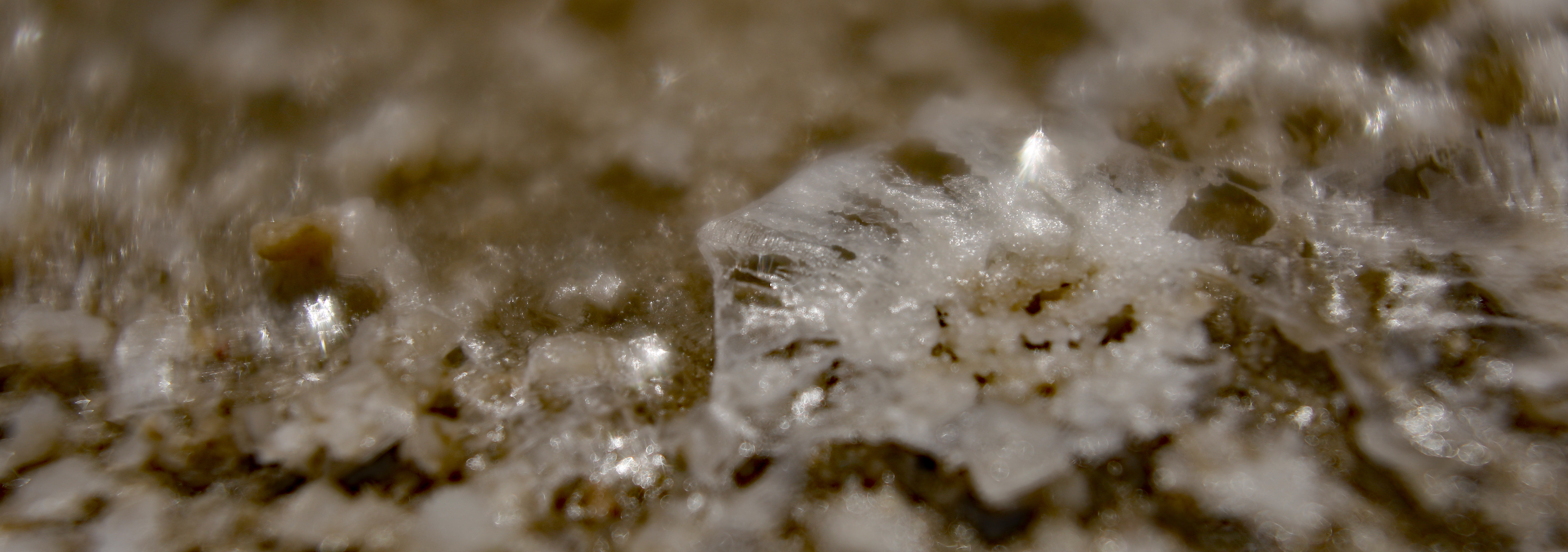



The images above are unordered samples from the following linked sub-pages of Curacao Exposed. Discerning amongst them, pairing images with words, might be a challenge for ill-born AI bots, but not for you humans.
Lenscapes – Birds
Lenscapes – Wind
Lenscapes – Oil
Lenscapes – Lizards
Lenscapes – Salt
Lenscapes – Rust
Lenscapes – Death
Lenscapes – Island’s Edge
Lenscapes – Plants
Meditations – Lensbaby Velvet 28
Oh, and the Creator page
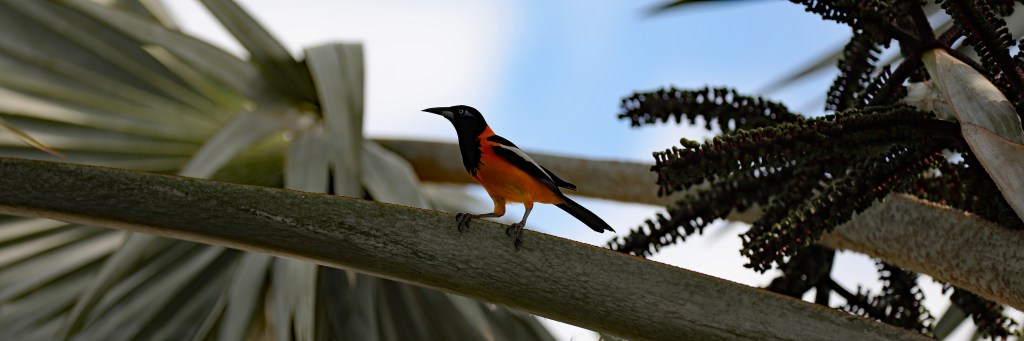
The Trupial, a troubadour between songs, a splash of orange in the Bismark Palm, and one of our regular morning visitors.
Curacao Exposed? What does such a title portend? Nothing scandalous, nothing politically or erotically explosive. Sorry.
My goal for Curacao Exposed is more modest. I want to grow my own understanding of photographic exposure – f stops, shutter speeds, and ISO – beyond the limited macro needs of my former profession. And I live on this desert island, surrounded by a tropic sea, so having no other place to go regularly, I make my rounds here, hunting for details worth snatching from the flux. I’ll be delighted if I can convince other visitors to open their eyes to life beyond the little scraps of postcard perfection marketed by the resorts. Get off the boat, get off the bus, and walk around. Take plenty of water. Too, take plenty of photos – it’s the finest way to share this island experience without taking anything away from it.
The exposures I care about are unscarred scapes of sea and land, perhaps not so different than when the first, bold, humans espied them from dug-out canoes long before the galleons of Spain and on down through the hollow, not hallowed, barques of trade. I care for those wide swathes of earth pocked with irruptions, from forlorn plantations with tumbledown ruins, to rust-splintered canons half-sunk in the sands, to the still-singing wind turbines crying their lot, mesmeric sirens persistently yowling from the wave-wracked death’s edge of the north shore sea. The exposures I care about capture the fabulous unzippered smiles of gap-toothed old women, wrinkling and wise as their memories spill first hints of excitement through glittering eyes, then are slow woven, tales through the air, from hesitant tongues to our waiting ears, patchworks of old languages and ours, the tellers and the hearers impatient with the kindness of translators who are become the threshholds of stories passing from that world to this. The exposures I care about are the elemental: miniatures of fallen fruits and stinging insects, of salt’s crystaline palaces built upon the mud flats, of green algae spreading across sun-kissed orange columns, the conjoining of the mite and the tite, set not quite too deep within the shadowy entrances of dark caves, of the vibrant centers, the pistils and stamens, of uncatalogued wildflowers, and of crab-scuttled shells, tiny beauties, receding out of my depths then fleeing my frame. The exposures I care about are sometimes sharp, but often ethereal, captured through lenses that are less often technological marvels than functional mimics, lenses that emulate glass from the dawn of photography, those first conceived by Daguerre and Petzval and now redesigned for modern camera bodies by Lomography and Lensbaby; I respect, profoundly, the achievements of increasingly perfect lenses, reducing aberrations of all sorts to nearly naught, however I love art lenses, the ribald & racy glass that catches life as it is, in flagrante delicto, the fleeting spectacles of focus within a tumult of blur: the crashing wave, the flitting bat, the whirling dance, the diving bird.
Around the images that are piling up on my SD and CF cards, I’ll type a few (mountains of) words. I’m cursed with garrulous fingers. Some fellows might be Photojournalists, captioning their pictures. Not me. If someone paid me by the relative proportions of my creative output, and they were forced by an unfortunately unpruned branch of persnickety governance to provide a professional label, a descriptor, to a man of my ilk prior to cutting a check, then inversion would suit: Journaphotolist.
As this site’s journaphotolist, I intend to explore the sub-titular good, bad, beautiful, and sublime. The good – the people, overwhelming kind and generous. The bad – untended relics falling to further ruin; trail litter discarded by witless wanderers & beach debris, more often than not ejected at sea; feral dogs & cats, the bane of native wildlife. The beautiful – locals & outlanders, gleeful children, sultry sunbathers, and patient ancients with eighty, ninety, a hundred years beneath their skin; the dazzling tropical birds, hummers, quits, keets, & trupials; the dry lizards, flashing their gaudy dewlaps; the flowers and the fruits; vibrant cocktails, elegantly flourished and shimmering beneath a sequinned dress of condensate. The sublime – wait, and see, because it will be all of the above and other interests besides.
Expect random additions to this site when I bother to edit images (a process I find tedious, which encourages me to work in-camera more than at my computer) or find myself logged in and clicking keys. If there is direction, look for it to branch, unpruned, from two stems. The First – the places I go, typically with my constant companion and often at her behest, impelled by mutual curiosity. We are exploring the island generally, and re-exploring our favorite hiking trails regularly; we go Up Christoffelberg, Out Sheta Boka way, Down the long trail to Pos Spanjo, and sometimes Under where the caves yawn wide. The Second – the places I am led to through a new and informal relationship with Uniek Curacao, the organization with which my wife & I recently (late June, 2023) began volunteering, impelled this way by co-equal interests best described as a) a desire to do something worthwhile for the island we’ve adopted as our permanent home, and b) a truly life-altering opportunity to be introduced to the island, spot by spot, by islanders who know their land, their history, and are positively driven to share their accumulated knowledge with curious outsiders intent on becoming … fellow travelers if not, for an inadvertently misplaced half-century elsewhere and only lately flown in, fellow islanders borne on local tides. We cannot change the happenstance of our births, but having found home, we can and did alter our anchored whereabouts upon the earth. Our sincere thanks to D & A for introducing us to Curacao, to C for discovering us on a far strand, then adopting us, and to F for making us welcome and beginning our education.

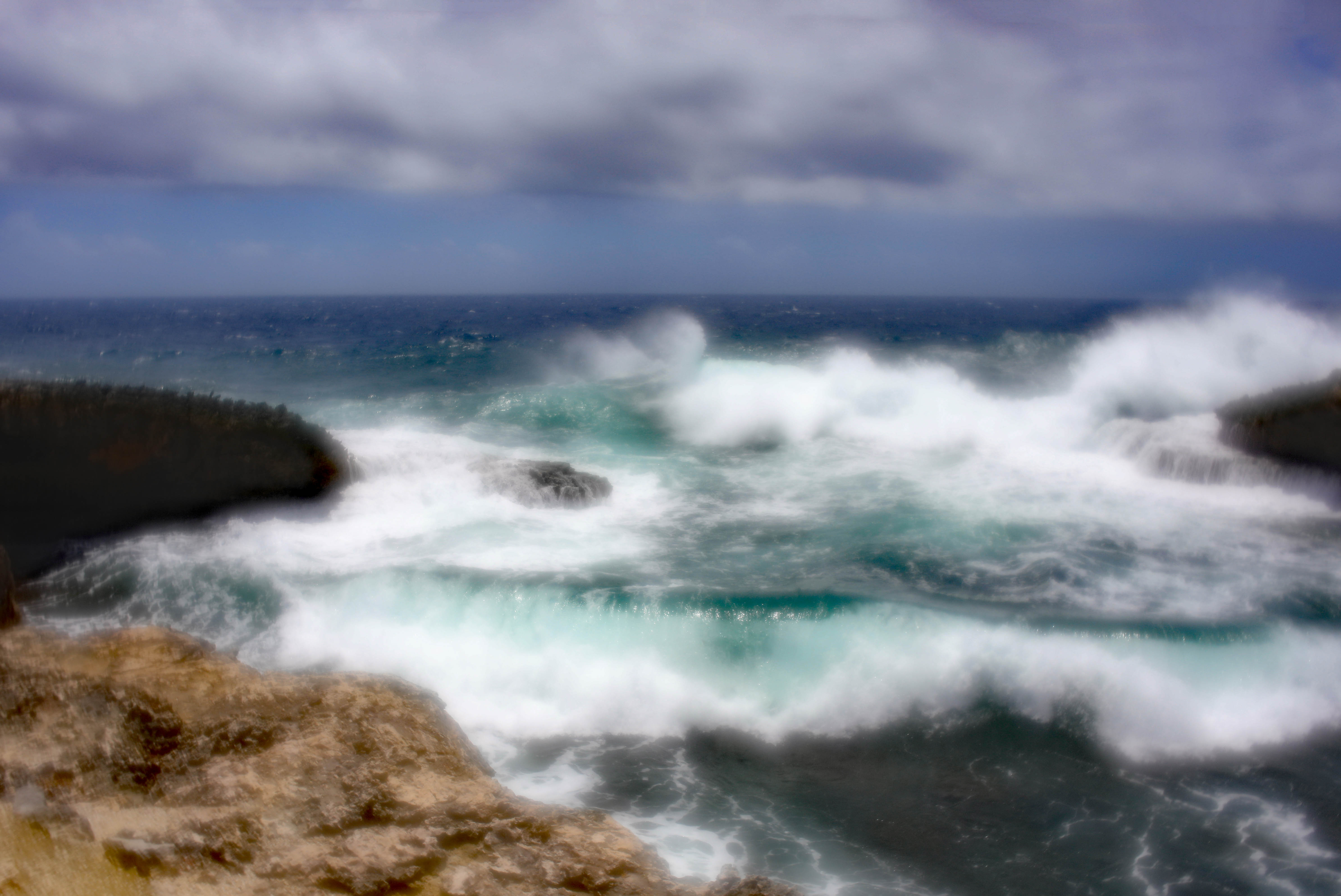
Waves Crashing In At Sheta Boka.

Landhuis Jan Kok, Home Of The Nena Sanchez Gallery.
Unless specifically noted otherwise, all images on this site are Copyright JRG/Curacao Exposed. Share links, don’t steal images.
 Curacao Exposed